
The Two Things That Matter More Than Age
It's not the date on the birth certificate — it's two things. A child who has both is ready at age 4, 6, or 11. The age guidelines below are starting points, not deadlines.
Can the child sit with one task for at least 15–20 minutes? Music lessons require focused engagement, not background play.
Does the child want to learn? Forced lessons rarely lead to long-term progress. The right starting age is when the child is curious and asking to play.
Age-by-Instrument Quick Reference
 Piano
Piano Violin
 Guitar (acoustic)Guitar (electric)
 Voice / Singing
 Cello
Cello Ukulele
 Drums
Drums Bass Guitar
 Flute
Flute Clarinet
 Saxophone
 Trumpet
 Trombone
 Songwriting & Production
Instrument-by-Instrument Guide
Piano
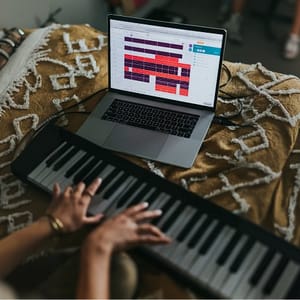
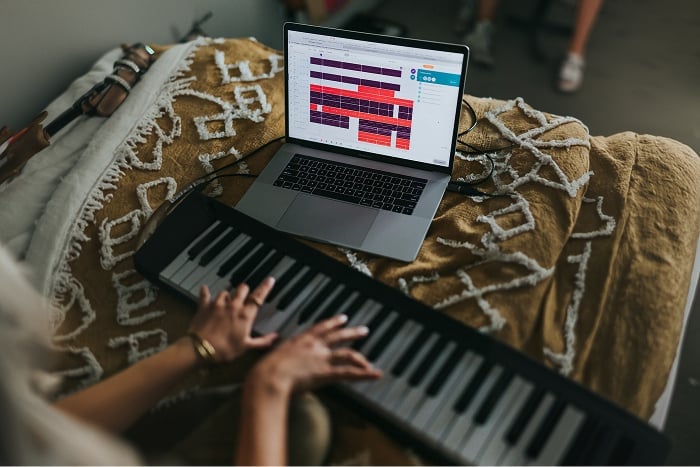
Age 5–7The most common first instrument for good reason. The notes are visible (each key is one note), no posture or breath training is required, and progress is rewarding fast. Most children are ready around age 5 to 7. The Suzuki method enables piano lessons as early as age 3 or 4 when the child has a parent willing to participate in lessons.
Violin
Age 4–8One of the few instruments where starting very young (age 3–4) is actively recommended through the Suzuki method. Suzuki uses listening, imitation, and structured small steps to build technique before the child even reads music. For traditional violin instruction, age 6 to 8 is more typical. Smaller violins (1/16, 1/8, 1/4, 1/2 sizes) make the instrument accessible to small children.
Guitar
Acoustic 6–8 · Electric 8+Guitar requires finger strength and hand coordination. Most kids are ready for a 1/2 or 3/4-size acoustic guitar between age 6 and 8. Electric guitar is best started a bit later (age 8+) because the body is heavier and technique demands are different. Smaller-bodied guitars and lighter-gauge strings make early lessons more comfortable.
Voice & Singing
Formal training age 8+Formal vocal training is best started around age 8. Before that, vocal cords are still developing and aggressive technique training can cause strain. That said, informal singing — joining a children's choir, singing along with songs, basic ear training — is wonderful at any age and builds the foundation that formal lessons later build on. For teens going through voice changes, a good teacher works with the changing voice, not against it.
Cello
Age 5–7Cello is approachable for younger children when a properly-sized instrument is used. Cellos come in sizes from 1/16 up to full size — a 1/4-size cello fits a typical 5-to-7-year-old. The Suzuki method works for cello as well, enabling lessons as early as age 4.
Drums
Age 6–8Drums require coordination between hands and feet, and reaching the foot pedals comfortably is a real factor. Most kids are physically ready around age 6 to 8 with a kid-sized drum kit. Younger children (age 4–5) can begin with hand drums and simple rhythm exercises, which build the foundation for full kit lessons later.
Brass & Woodwind Instruments
Brass (trumpet, trombone, French horn, tuba) and woodwind (flute, clarinet, saxophone, oboe) instruments require lung capacity, embouchure development, and — for some — adult-sized teeth. Most children are physiologically ready between age 8 and 11 depending on the instrument. School band programs are a great entry point and often align well with the right starting ages.
How Much Should My Child Practice Each Day?
Consistency matters far more than total time. Short daily sessions beat long sporadic ones every time.
Is It Ever Too Late to Start?
of Craft Music's student body is adults — beginners returning to music, professionals learning for the first time, or experienced players sharpening specific skills.
Adults often progress faster than children on the same number of practice hours because they bring focus and motivation that kids can't match. The "best" age for any child (or adult) to start is the age at which they want to learn — whether that is 5, 15, or 50.
Frequently Asked Questions
Piano, violin (via Suzuki), and ukulele are the three best instruments for most 5-year-olds. All three are physically accessible at that age and offer clear early progress that keeps kids engaged.
Not at all. Children who start instruments at age 8, 10, or 12 often progress faster because they have longer attention spans and more cognitive maturity. There is no age "deadline" for starting an instrument.
Yes — through the Suzuki method, primarily for violin, piano, and cello. Suzuki lessons at age 3 involve heavy parent participation and focus on listening, imitation, and tiny first steps. Traditional one-on-one lessons usually start at age 5 or later.
Ages 4–7: 10–15 minutes per day, ideally split into two short sessions. Ages 8–12: 20–30 minutes per day. Teens: 30–60 minutes depending on goals. Consistency matters far more than total time.
Encourage it. Most professional musicians played multiple instruments as children before settling on their main one. Time spent on a "wrong" instrument is never wasted — the music theory, rhythm, and ear training carry over.


