Real-time feedback
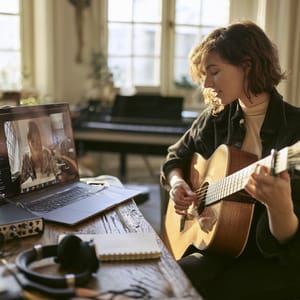
You should not wait a week to learn that a technical habit is working against you. A teacher can spot the issue during the lesson and help correct it immediately.

Fiona Eloise Murray
July 26, 2026
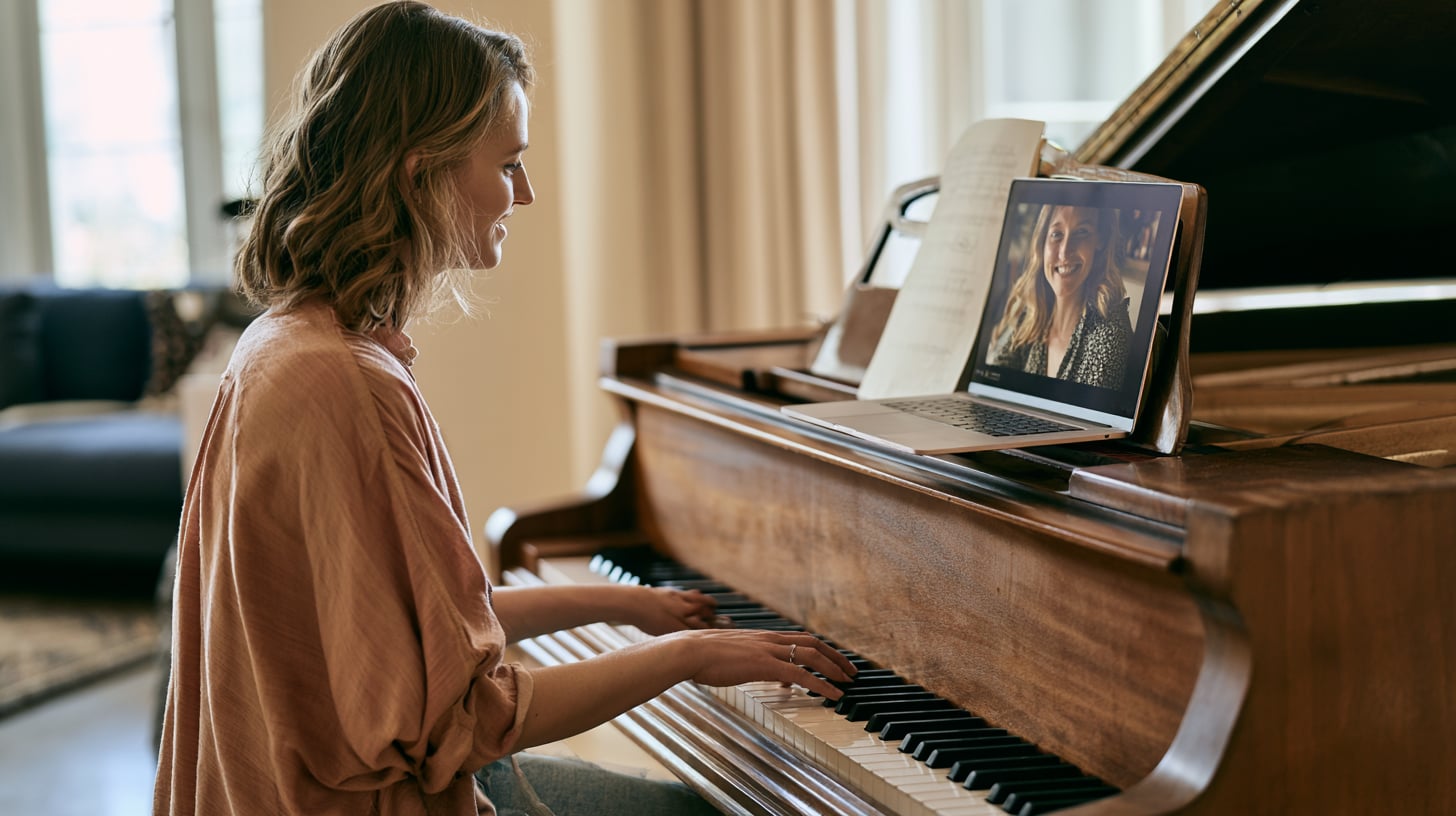
Online music lessons let you study with a live teacher from almost anywhere—piano, guitar, voice, violin, drums, songwriting, production, theory, and more—without depending on a studio down the street. Technology makes the connection possible. What makes the lesson work is the same thing that has always mattered: a teacher who listens, notices what needs attention, and builds a path toward real progress.
This guide covers how live online music lessons work, what equipment you need, how to choose an online music teacher, and how Craft Music supports students between sessions with Lesson Hub and matching help from our concierge. For a format comparison, see our in-home vs online music lessons article, or go straight to Craft Music online lessons.
Online music lessons are live, one-to-one private music lessons online—virtual sessions between a student and a music teacher using video and audio. You play at home on your own instrument. The teacher demonstrates, listens, gives feedback, shares materials, and builds a personalized plan.
That is different from a prerecorded course or music-learning app. Videos and apps can help with practice, but they cannot fully respond to the person playing. A live teacher can notice that your wrist is tense at the piano, a guitar chord is buzzing, your singing breath collapses at the end of a phrase, your violin bow is drifting, your drum pattern is inefficient, your composition needs clearer structure, or your mix sounds crowded. Those small observations prevent months of frustration.
Yes—when the teacher, technology, and lesson structure fit the student. Live online music lessons are especially effective when they include four things:
You should not wait a week to learn that a technical habit is working against you. A teacher can spot the issue during the lesson and help correct it immediately.
No two students share the same experience, taste, goals, attention span, or learning style. One student wants classical repertoire; another wants jazz improvisation, songwriting, auditions, or electronic production. The lesson should be built around the student—not a rigid universal sequence.
Progress usually follows a repeatable cycle: learn a manageable concept, apply it to real music, practice between lessons, get feedback, adjust the next goal. A good teacher directs that process without removing curiosity.
Students learn more when they feel understood. Encouragement matters, and so does honest, specific feedback. A good online teacher knows when to challenge, when to slow down, and when to connect technique to music the student actually wants to play.
Almost every major area of music study works well as a live online lesson—including online piano lessons, online guitar lessons, online singing lessons, and creative subjects that benefit from screen sharing.
Online learning can work for children, teenagers, adult beginners, returning musicians, advanced students, and working professionals. It is especially useful if you:
Many Craft Music families use in-home lessons during the school year and switch to online during travel—same teacher, no restart. Browse Craft Music teachers, or ask the concierge in the bottom right to get matched.
Most beginners need less than they expect. A basic setup:
The built-in camera and mic on a modern laptop or tablet are usually enough to begin. Later, an external microphone, headphones, audio interface, second camera, or wired connection can improve the experience.
Camera placement matters. The teacher should see your hands, posture, instrument, and face when needed. For piano, place the device slightly to the side. For guitar or violin, show both hands and the upper body. A good teacher will help improve the setup in the first lesson.
A first lesson should not feel like an exam. It is a chance for student and teacher to understand each other. Expect questions about the music you enjoy, prior study, goals, preferred structure vs. experimentation, performances or auditions, realistic practice time, and what helped or discouraged you before.
The teacher may listen to you play or sing, introduce a short concept, and suggest an initial plan. Beginners often cover posture, sound production, a simple rhythm, a few notes or chords, and a short piece. Experienced students may focus on technique assessment, repertoire, improvisation, interpretation, or a specific musical problem.
The right length depends on age, experience, instrument, and goals. More time is not automatically better—a focused short lesson can outperform an unfocused hour.
Often best for young beginners, limited attention spans, or focused weekly coaching.
More room for technique, repertoire, and creative work without becoming overwhelming.
Craft Music online lessons run 50 minutes at a variable rate set by each teacher—ideal for adults, advanced work, composition, songwriting, production, or audition prep.
Craft Music online lessons are 50 minutes, and pricing is variable—each teacher sets their own rate. You will see the price on the teacher’s profile before you book. Rates differ by instrument, experience, and specialty, so browse a few teachers (or ask the concierge in the bottom right) to find a fit for your budget and goals.
Prefer in-person at home instead? In-home lesson lengths and rates are listed separately on our in-home lessons page. Many students also mix formats with the same teacher. Start with online teachers.
Qualifications matter, but they are not the only factor. Look for an online music teacher who has:
Profiles, specialty areas, availability, and reviews all help. The “best” teacher is not always the most famous or expensive—it is the one whose experience and personality fit the student. On Craft Music, browse teachers yourself, or use the concierge in the bottom right to get matched by instrument, goals, and schedule. If the fit is not right, switching teachers is straightforward at no extra cost.
Live classroom built for music. Craft Music online lessons are designed for private instruction—not a generic video call. Conservatory- and university-trained teachers teach online piano, guitar, singing, and dozens of other subjects, with rates set by each teacher for 50-minute sessions.
Lesson Hub between sessions. Progress happens between lessons as much as during them. Lesson Hub is where you and your teacher keep goals, shared notes, practice updates, and assignments. Instead of “practice piano,” you leave with something specific—like “play measures 9–16 slowly with separate hands, then record one complete attempt.” Open Lesson Hub from your account after booking so the plan stays clear week to week.
Concierge matching. Not sure where to start? Use the concierge in the bottom right. Tell us your instrument, level, goals, and preferred times, and we will point you toward teachers who fit—same as browsing the teachers page yourself, with a human assist when you want it.
Format flexibility. Stay with the same teacher online, in-home, or a mix. Many students use online full-time; others combine formats around travel and school calendars. Read family feedback on our reviews page.
Create a dedicated music area when you can. Keep the instrument, stand, notebook, charger, pencils, and materials nearby.
Music education should do more than produce correct notes. Technique gives you the ability to express an idea clearly. Creativity helps you discover what you want to say. Community gives music a place to be shared. At Craft Music, students develop instrumental or vocal technique while also exploring favorite songs, improvisation, composition, songwriting, production, and performance—so you become more capable, and also more curious and confident.
Yes. Beginners often benefit from the structure, immediate feedback, and personalized guidance of a live teacher—especially compared with apps or prerecorded courses alone.
Yes. Choose a teacher experienced with children. Younger students may do better with shorter lessons and occasional parental support nearby. For very young beginners (under about age 7), in-home can still be easier for hand position; many families start in-home and add online later.
Piano, guitar, voice, violin, drums, woodwinds, brass, ukulele, music production, composition, songwriting, and many other subjects can be taught as live online music lessons.
No. Most students begin with a laptop or tablet and upgrade later if they want better sound or camera angles.
They serve different purposes. Prerecorded courses offer convenience. Live private music lessons online provide individualized feedback, accountability, and adaptation—the difference between watching a tutorial and studying with a teacher.
Craft Music online lessons are 50 minutes with variable rates set by each teacher—check the price on their profile before booking. Book a teacher, or ask the concierge in the bottom right to match you by instrument, goals, and budget.
The right online teacher brings serious musical guidance into your home without losing the personal relationship that makes lessons meaningful. Browse Craft Music online teachers below, or open the concierge in the bottom right to get matched by instrument, goals, schedule, and musical interests.
Explore online music lessons Meet Craft Music teachers Compare in-home lessons Read reviewsAt Craft Music, we believe music is an expressive language and a creative outlet. It shapes culture and identity, and we're here to inspire and support your musical and personal growth!


Need Support?
admin@craft-music.com© Copyright 2026 Craft Music. All Rights Reserved. Various trademarks held by their respective owners.