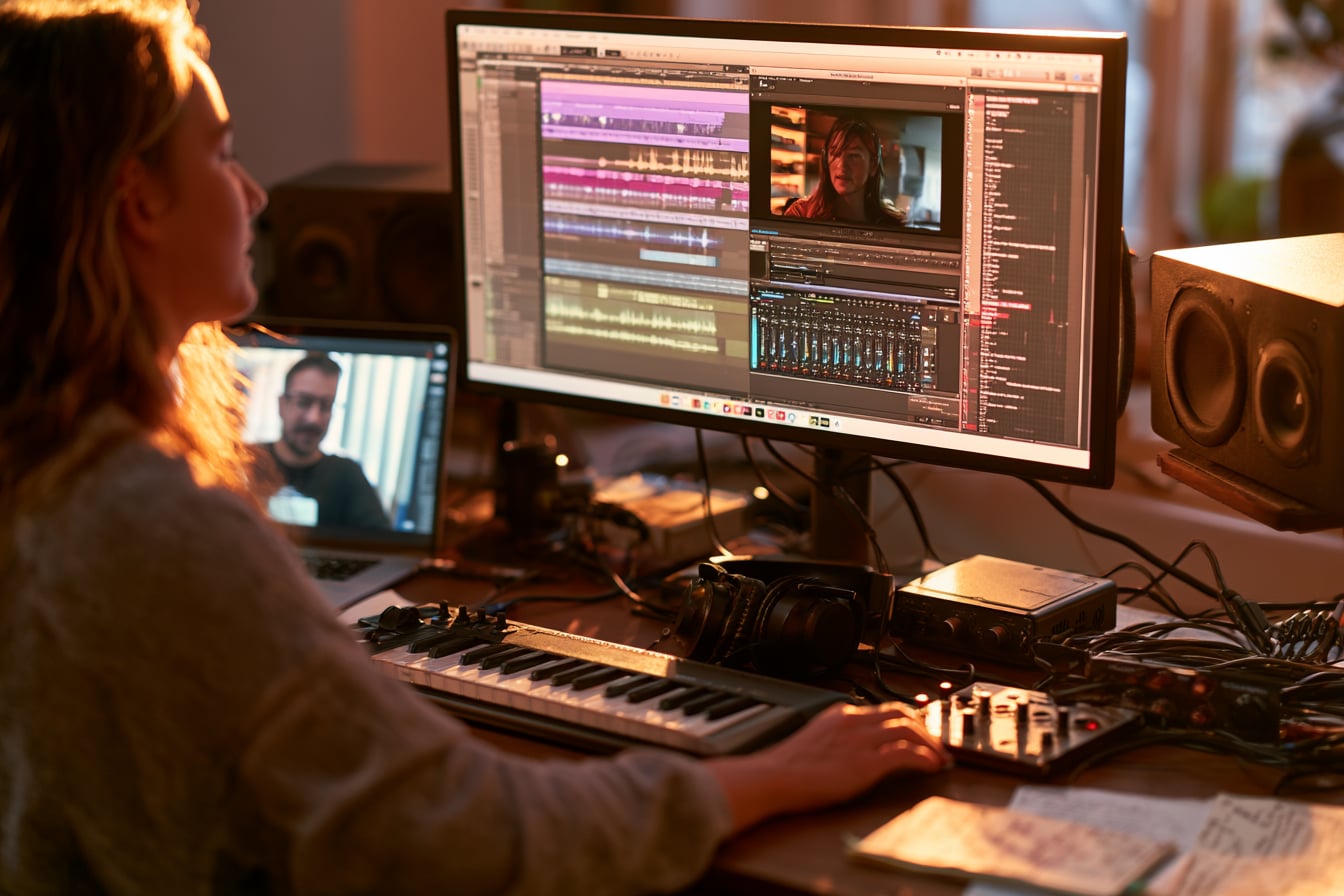
Online music lessons have gone from a niche option to a mainstream format in just a few years. High-speed home internet, good webcams, quality headsets, and mature video tools have made 1-on-1 live music instruction genuinely effective through a screen. But not every instrument, every age, or every learning style is a perfect fit for the online format. This guide covers everything a prospective student needs to know before signing up for online music lessons in 2026.
For a broader comparison against in-person formats, see our detailed in-home vs online music lessons guide. For teacher selection tips, see our guide to choosing the right music teacher. You can also browse Craft Music online lessons or Craft Music Online.
Who Online Music Lessons Work Best For
Online music lessons are not a universal solution. They work best in specific situations, and less well in others. Here is who benefits most:
- Teenagers and adult beginners age 13 and up—online works essentially as well as in-person for this age band
- Families in cities without deep local teacher coverage—online opens a nationwide teacher pool
- Busy professionals whose schedule cannot accommodate a weekly commute to a studio
- Homeschool families integrating music into a flexible daily schedule
- Intermediate and advanced players seeking a specialist teacher not available locally
- Students who travel frequently and need to keep lessons going across locations
Who Might Do Better In-Person
- Very young beginners (age 4 to 7) who benefit from a teacher physically adjusting hand position and posture
- Beginner violin, cello, and viola students under age 8, because bow hold and shoulder position are hard to correct through a screen
- Students who thrive on face-to-face energy and struggle to focus over video
- Students without reliable high-speed internet
If you are in LA, SF, or Portland and prefer in-person, see Craft Music in-home lessons (rates: $68 for 30 minutes, $93 for 45 minutes, and $106 for 1 hour). Many families mix formats over the year.