
What Is the Easiest Instrument to Learn Music? A Practical Guide for Beginners

Spalding Shara
June 17, 2026
Choosing Your First Instrument: What "Easy" Really Means
The most common question people ask before starting their music journey is: "What is the easiest instrument to learn?" It's a completely fair question — but the answer is more nuanced than a simple ranking.
"Easiest" depends on several factors: your physical build, your musical goals, your budget, your patience for a learning curve, and — most importantly — how much you genuinely enjoy the instrument. An instrument you love will always feel easier than one you are indifferent to.
That said, some instruments genuinely have a gentler learning curve than others. Based on years of experience at Craft Music teaching students of all ages across the United States, here are the instruments most consistently rated as beginner-friendly.
Already know which instrument you want to learn? Craft Music connects you with expert teachers for in-home and online lessons nationwide — including Los Angeles, Portland, San Francisco, and more.
The 7 Easiest Instruments to Learn
Ukulele — The Friendliest Beginner Instrument
The ukulele is widely regarded as one of the easiest instruments for absolute beginners. It has only four strings (compared to guitar's six), the nylon strings are gentle on fingertips, and a basic set of four chords lets you play hundreds of songs. Its small size makes it easy to handle for children and adults alike.
Best for: Kids, adults who want a fun and social instrument, anyone on a budget.Piano / Keyboard — The Best Foundation for All Music
The piano is visually laid out in a logical, linear way that makes understanding music theory much more intuitive than most other instruments. There is no complex embouchure (like trumpet) or fretting technique (like guitar) — you press a key and you get the correct note. For this reason, many music educators recommend piano as the best first instrument for children.
Best for: Children starting formal music education, adults who want to understand music theory, anyone interested in composing or songwriting.Guitar — The Most Rewarding Quick Win
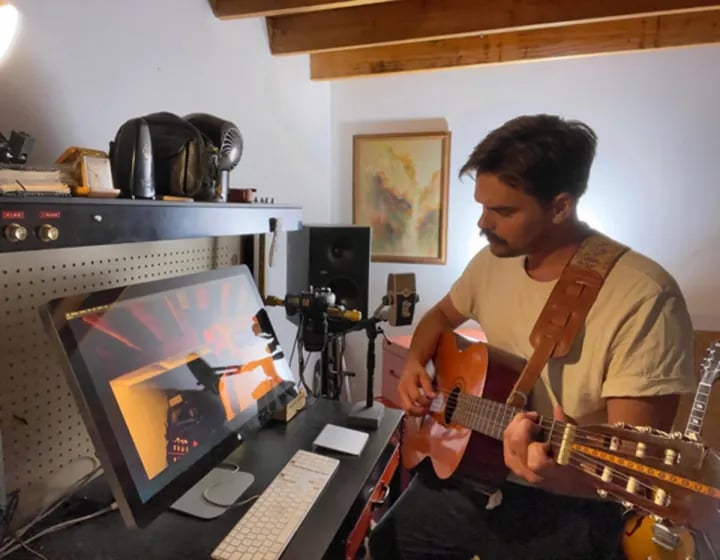
Acoustic guitar is one of the most popular instruments in the world precisely because of its versatility and relatively quick early rewards. Learning a few basic chords lets you play countless popular songs within weeks. The main challenge is developing calluses on the fingertips and finger strength — but this comes naturally with practice.
Best for: Teenagers and adults who want to play popular music, people who like to sing and play simultaneously.Drums / Percussion — For Students Who Think in Rhythm
If you are naturally rhythmic and energetic, drums can be surprisingly accessible for beginners. You do not need to worry about pitch or melody in the early stages — you simply focus on timing and coordination. Many students who struggle with melodic instruments thrive on drums.
Best for: Energetic learners, students with a natural sense of rhythm, those interested in rock or pop music.Harmonica — The Most Portable Beginner Instrument
The harmonica is one of the most underrated beginner instruments. It is inexpensive, portable, and you can produce pleasing sounds immediately without years of study. The diatonic harmonica is the best starting point for beginners interested in folk, blues, or country music.
Best for: Budget-conscious learners, people who love blues or folk music, those who want to learn something quickly.Kalimba — The Easiest Instrument Absolutely Anyone Can Play
The kalimba (also called thumb piano) has gained enormous popularity recently and for good reason — it is one of the few instruments where almost anyone can produce a pleasing melody within minutes of picking it up. Tines are labeled with notes, no prior music knowledge is required, and it is incredibly soothing to play.
Best for: Complete beginners of any age, those who want a mindfulness-oriented instrument, gift recipients.Recorder — The Classic First Instrument for Children
The recorder may not be glamorous, but it is one of the most pedagogically effective starter instruments for children. It teaches breath control, finger coordination, and music reading — all skills that transfer directly to more advanced instruments.
Best for: Young children ages 5–8 as a first instrument before transitioning to something larger.Easiest vs. Most Rewarding: An Important Distinction
While the instruments above are easiest to begin, the "easiest" instrument is not always the most rewarding long-term. Piano, guitar, and violin — despite their challenges — offer extraordinary depth and reward for dedicated students. The most important thing is to choose an instrument you are genuinely excited about, then commit to consistent lessons and practice.
The single best investment you can make as a beginner is in quality lessons from a professional teacher. Self-teaching is possible, but a great teacher accelerates your progress dramatically — and prevents bad habits that can take years to correct.
How to Choose the Right Instrument for You
- Think about the music you love: What genres and artists inspire you? Start with an instrument associated with that music.
- Consider your budget: Instruments range from $20 (harmonica, kalimba) to $500+ for a starter guitar or keyboard.
- Think about your living situation: Drums and trumpet are louder than piano or ukulele. For apartment dwellers, consider what is practical.
- Try before you decide: Many Craft Music teachers offer trial lessons — use it to explore an instrument before committing.
- Remember: there is no wrong answer. The best instrument is the one you will actually play.
Frequently Asked Questions
What is the hardest instrument to play?
Generally considered the most technically demanding instruments are the violin, French horn, oboe, and classical guitar. These instruments require years of dedicated study to master.
What is the easiest instrument to learn for adults?
For adult beginners, ukulele, keyboard, and guitar are consistently the top recommendations. Adults often progress faster than children due to greater cognitive ability, so even instruments with steeper curves are very accessible with good instruction.
Can I learn any instrument online?
Yes. Online music lessons via Craft Music are available for piano, guitar, violin, drums, ukulele, trumpet, and many more. Our teachers use video technology to provide real-time feedback on your technique.
Ready to Start Playing?
Get matched with a vetted Craft Music teacher for in-home or online lessons, wherever you are.


