Music Lessons for Kids in San Francisco: Age by Age Guide

Anne Lise

Anne Lise

July 18, 2026

music lessons for kids san francisco
Music Lessons for Kids in San Francisco: Age by Age Guide

“When should my child start music lessons?” is the most common question SF parents ask us. The honest answer depends on both the child and the instrument. A 4-year-old can absolutely start piano through the Suzuki method. A 4-year-old cannot really start trumpet, because their body physically is not ready. This SF-specific guide walks through what works age by age, what to try first, and what signals mean your child is ready.

For the broader national breakdown by instrument, see our best age to start music lessons guide. For the SF-specific music school landscape, see our finding music lessons in San Francisco article. You can also browse Craft Music San Francisco and compare in-home vs online lessons.

Age-by-Age Guide for SF Kids

Age 2 to 3: Informal music exposure

Formal one-on-one lessons at this age rarely stick. What works is informal music exposure: singing at home, group music classes like Music Together, simple percussion toys, and dancing to music. This age is about building the ear and the association between music and joy. It is the foundation, not the training.

Age 3 to 4: First serious instruments (Suzuki)

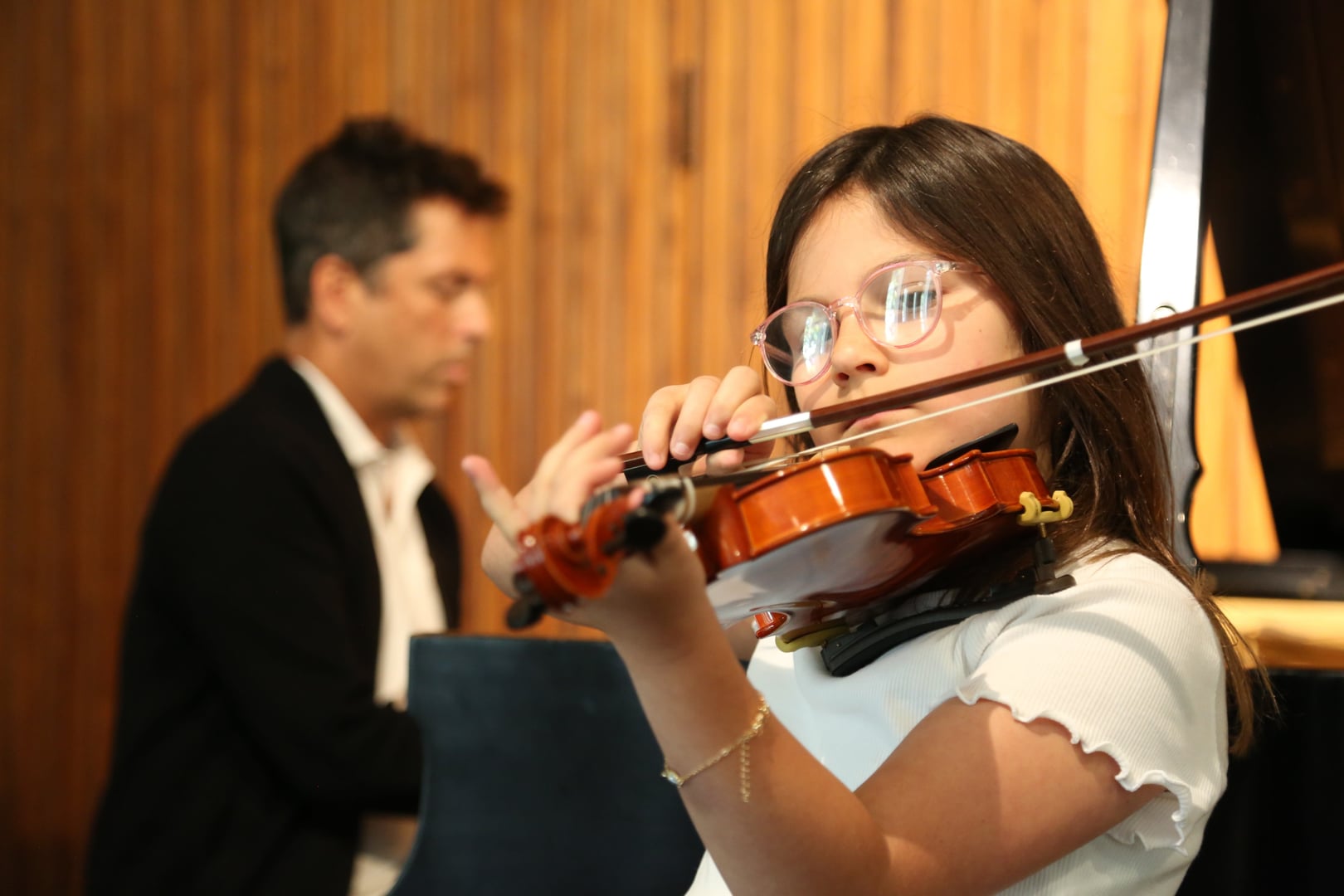
The Suzuki method makes real one-on-one instruction possible from age 3 to 4, primarily for violin and piano. Suzuki lessons involve heavy parent participation, focus on listening and imitation before reading, and progress in tiny structured steps. Suzuki works when a parent is willing to sit through lessons and support daily home practice. For non-Suzuki instruction, wait until at least age 5.

Age 5 to 7: The sweet spot for most kids

This is the most common starting age band for one-on-one music instruction in SF. Kids at this age can name letters, sit for a focused 20 to 30 minutes, and follow multi-step instructions. Piano, violin (Suzuki), and ukulele work especially well here. Formal voice technique typically waits until age 8.

Age 8 to 10: Broadening the instrument options

By age 8 to 10, most kids have the finger strength, lung capacity, and attention span for a much wider range: guitar, formal voice, drums, woodwinds, brass (trumpet from about 8, trombone from about 9), and bass guitar usually from age 9 or later.

Age 11 to 14: The motivation question

By this age, most kids know whether they want to be doing music or not. Forcing lessons rarely works. What does work: giving them agency in choosing the instrument and teacher, and matching them with someone who plays and teaches the style they actually listen to. Personality fit matters most here.

Age 15 to 18: Serious study or enjoyment

Older teens tend to fall into two camps: those aiming at conservatory or serious performance, and those doing music for enjoyment, songwriting, or their own projects. Both are valid. Ask what they want, then match the teacher accordingly.

Best Starting Instruments by Age Window

Ages 5 to 7 are the sweet spot for most first instruments. Browse teachers by instrument below:

  • Piano: browse SF piano lessons or connect with SF piano teachers. The most requested first instrument for good reason.
  • Violin: SF violin lessons with the Suzuki method work well early on.
  • Ukulele: a great low-friction first instrument, especially for kids interested in singing along.
  • Guitar (from about age 8): connect with SF guitar teachers.
  • Voice: informal singing at any age; formal vocal technique typically starts age 8.
  • Drums, woodwind, and brass: usually best from age 8 to 10 when lung capacity and finger strength catch up.

How Long Kids Should Practice at Each Age

Practice guidelines by age, ideally daily:

  • Age 4 to 7: 10 to 15 minutes per day, split into two short sessions if possible.
  • Age 8 to 12: 20 to 30 minutes per day.
  • Age 13 to 18: 30 to 60 minutes per day depending on goals.

What SF Format Works Best at Each Age

A quick decision guide for SF families:

Ages 4 to 7

In-home is usually best. Kids this young focus better in familiar spaces, and driving them to a studio for a 30-minute lesson is often more disruptive than helpful. See in-home lessons.

Ages 8 to 12

In-home or studio works well. Family scheduling usually decides. Craft Music in-home rates are $68 for 30 minutes, $93 for 45 minutes, and $106 for 1 hour.

Ages 13+

Online opens up better teachers. Combine online lessons (50 minutes, teacher-set rates) for specialized instruction with occasional in-person for recitals.

Warning Signs a Child Wants to Quit (And What To Do)

Almost every child who takes music lessons goes through at least one “I want to quit” phase, usually somewhere between months 3 and 9. This is normal, and how parents respond makes a huge difference. Signs to watch for:

  • Practice becomes a daily fight rather than a routine.
  • The child stops mentioning the instrument outside of lessons and practice.
  • The child looks visibly unhappy in lessons rather than engaged.
  • Progress plateaus for several weeks in a row.

Talk with the teacher before quitting. Often a repertoire change, a different style, a shorter practice plan, or a teacher switch solves it. If the match is not right, Craft Music lets you switch teachers at no cost — browse the teachers page or ask the concierge in the bottom right.

Frequently Asked Questions

What is the best age to start music lessons for a child in SF?

Most children are ready between age 5 and 7. Some Suzuki-method programs (piano and violin) start at age 3 to 4. Below age 3, informal music exposure works better than formal lessons.

What is the best first instrument for a young SF child?

Piano is the most common first instrument because the notes are visible and progress is fast in the early weeks. Violin (via Suzuki) and ukulele are also great early choices. The best first instrument is one the child is excited about. Browse SF piano teachers to get started.

How long should my SF child practice each day?

For ages 4 to 7: 10 to 15 minutes per day. For ages 8 to 12: 20 to 30 minutes. For teens: 30 to 60 minutes depending on goals. Daily consistency matters far more than session length.

Should I sit in on my child’s music lessons in SF?

For Suzuki lessons (ages 3 to 6), parent participation is expected. For older kids, sitting in on every lesson can be counterproductive. Ask the teacher what they prefer, and follow their lead.

What if my child wants to switch instruments after a few months?

Encourage it. Most professional musicians played multiple instruments as children before settling on a main one. The music theory, rhythm training, and ear development from any instrument carry over.

Ready to Get Started?

Ready to find the right first instrument and teacher for your SF child? Book with a Craft Music teacher below, or open the concierge in the bottom right to get matched by age, interests, and neighborhood.

Meet the Craft Music team Browse SF piano teachers San Francisco lessons Browse online lessons